Maximizing Performance with Innovative Cut Flight Screw Technology
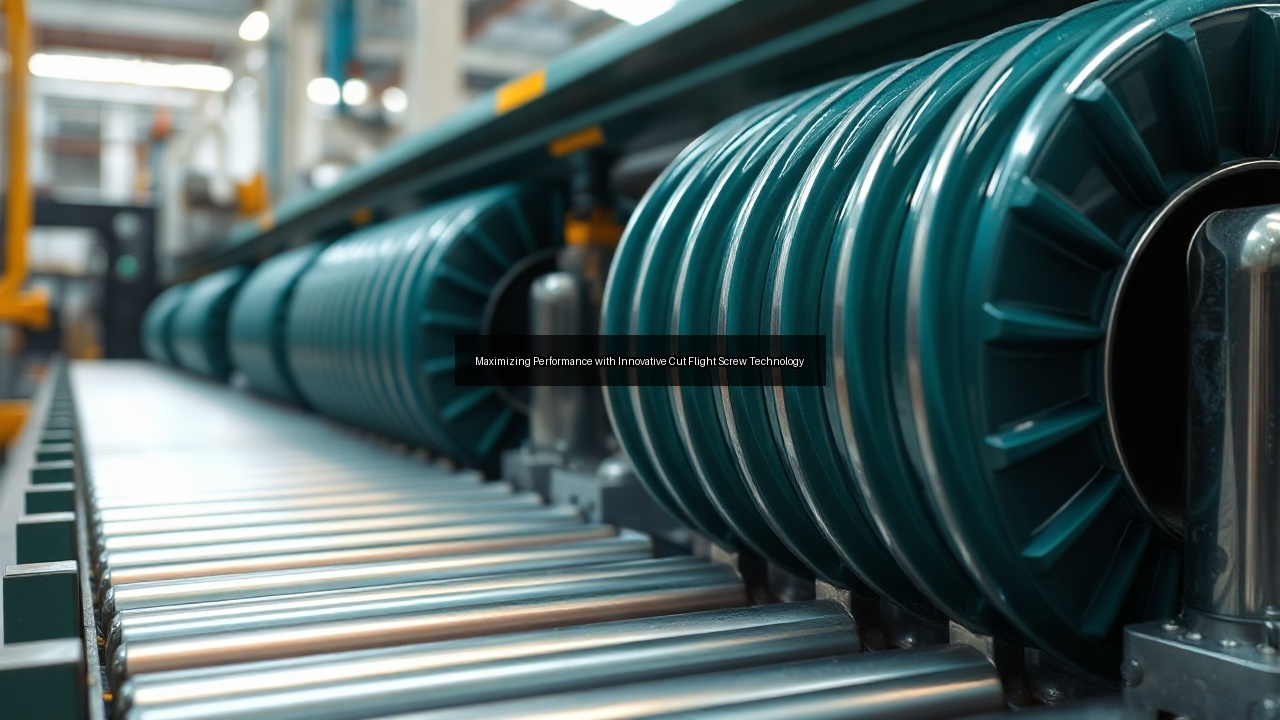
Understanding Cut Flight Screw Technology
Overview of Screw Conveyors
Screw conveyors stand as foundational tools in industrial material handling, moving bulk materials through enclosed troughs using rotating helical screws. Engineers rely on these conveyor systems to transport powders, granules, and even sticky substances across manufacturing floors. Traditional screw conveyors feature a simple auger design, but innovations like cut flight screw conveyors elevate performance by addressing limitations in handling irregular loads. These systems integrate seamlessly into conveyor networks, reducing downtime and boosting throughput in processing plants. From food production to chemical mixing, screw conveyors handle diverse applications, with cut and folded flight screw conveyors emerging as a superior choice for challenging environments. Their helical flights push materials forward efficiently, minimizing backflow and ensuring consistent flow rates. Industries appreciate how these conveyors adapt to space constraints, often installing them horizontally, vertically, or at angles. As bulk handling demands grow, screw conveyors evolve, incorporating cut flight designs to manage higher volumes without excessive wear on components. This overview highlights why cut flight screw conveyors represent a pivotal advancement in conveyor technology, offering reliability that standard auger conveyors struggle to match.
Components of Cut and Folded Flight Screw Conveyors
Cut and folded flight screw conveyors consist of several key elements that work in unison to optimize material transport. The central shaft forms the backbone, providing structural integrity while rotating to drive the system. Attached to this shaft, the helical flights—often cut and folded for specific functions—form the primary moving parts, scooping and propelling materials along the trough. These flights differ from standard helicoid flights by featuring sections that are sheared and bent, creating pockets ideal for sticky or fibrous loads. End bearings and couplings secure the assembly, ensuring smooth operation under varying loads. Troughs, typically U-shaped or tubular, contain the material and prevent spills, while inlet and discharge spouts direct flow precisely. Additional components like paddles enhance mixing in cut flight designs, breaking up clumps for uniform conveyance. In manufacturing, these parts undergo rigorous fabrication to withstand corrosion and abrasion, extending service life. Understanding these components reveals how cut and folded screw conveyors outperform basic flight conveyors, integrating seamlessly into larger conveyor systems for enhanced efficiency.
How Cut Flight Technology Works
Cut flight technology operates by modifying standard helical flights into segmented, folded forms that improve material interaction within screw conveyors. During rotation, the cut sections create intermittent pushing actions, reducing slippage and enhancing grip on materials like wet grains or cohesive pastes. This design disrupts continuous flow, allowing air pockets to form and prevent compaction, which plagues traditional auger conveyors. As the screw turns, folded edges act like scoops, lifting and advancing bulk mass forward while minimizing resistance. Engineers calculate pitch and flight thickness to match load characteristics, ensuring optimal horsepower usage. In operation, cut flight screw conveyors handle varying speeds, adapting to throughput needs without jamming. This mechanism shines in environments with high moisture content, where standard flights falter. By folding the flight edges inward or outward, the technology customizes flow patterns, from gentle handling to aggressive pushing. Overall, cut flight works by transforming potential energy into directed motion, making cut and folded flight screw conveyors indispensable in modern conveyor applications.
Advantages of Cut Flight Screw Conveyors

Enhanced Material Handling Efficiency
Cut flight screw conveyors boost material handling efficiency by design, tackling issues that hinder standard screw conveyors in demanding scenarios. Their segmented flights prevent material buildup, ensuring steady flow even with irregular or sticky substances. In manufacturing plants, this translates to faster cycle times and reduced labor for clearing blockages. Compared to basic flight screw conveyors, cut and folded versions handle larger volumes per rotation, optimizing space in compact conveyor systems. Operators report up to 30% improvements in throughput, as the cut edges break down clumps and promote even distribution. This efficiency extends to vertical lifts, where gravity challenges traditional augers—cut flight designs maintain momentum without excessive power draw. Industries benefit from lower maintenance needs, as wear distributes evenly across folded sections. Ultimately, these conveyors elevate overall system performance, making them a go-to for bulk transport where precision matters.
Optimized Power Consumption and Horsepower
Cut flight screw conveyors optimize power consumption by streamlining the mechanics of material propulsion, demanding less horsepower than conventional models. The cut and folded flights reduce frictional losses, allowing motors to operate at lower speeds for the same output. This efficiency stems from minimized backpressure; segmented designs let materials advance smoothly, cutting energy waste from slippage. In conveyor systems, engineers select these for applications where energy costs dominate, achieving savings of 20-40% on horsepower requirements. For instance, transporting dense masses like cement or biomass becomes less taxing, preserving resources in high-volume manufacturing. Folded edges further aid by creating low-resistance paths, unlike solid helicoid flights that bog down under load. Real-world installations show quicker ROI through reduced utility bills and extended motor life. As industries prioritize green operations, cut flight technology aligns perfectly, balancing performance with power efficiency in screw conveyor setups.
Better Performance with Varying Moisture Content
Cut flight screw conveyors excel in environments with varying moisture content, where standard conveyors often struggle with clumping or inconsistent flow. The cut and folded flight design incorporates gaps that allow moisture-laden materials to drain or aerate, preventing sticky adhesions to the auger. This adaptability suits applications like agricultural processing, where wet harvests demand reliable transport without downtime. Unlike basic flight conveyors, these systems maintain efficiency across humidity levels, from dry powders to semi-wet slurries, by using folded sections to disrupt moisture bridges. Manufacturers note improved consistency in output, as paddles integrated into the design mix contents evenly. Handling moisture fluctuations reduces the need for pre-drying, saving time and resources in conveyor operations. In chemical or food sectors, this performance edge ensures product quality remains intact, avoiding contamination from uneven handling. Cut and folded screw conveyors thus provide robust solutions for moisture-challenged bulk material movement.
Applications of Innovative Cut Flight Screw Technology
Industries Utilizing Cut Flight Conveyors
Numerous industries harness cut flight conveyors for their superior handling of challenging materials, from agriculture to wastewater treatment. In food processing, these screw conveyors move viscous ingredients like dough or fruits without degradation, integrating into helical systems for seamless production lines. Chemical plants rely on cut and folded flight screw conveyors to transport corrosive powders, where the design's durability prevents leaks and contamination. Mining operations use them for ore slurries, benefiting from low-maintenance features in harsh conditions. Pharmaceutical manufacturing employs these for precise dosing of hygroscopic compounds, ensuring sterility and accuracy. Even in plastics recycling, cut flight technology manages fibrous wastes efficiently, reducing energy in conveyor systems. Across these sectors, the versatility of cut flight screw conveyors drives productivity, adapting to specific needs like high-temperature environments or explosive dusts. Their adoption underscores a shift toward innovative conveyors that enhance operational reliability.
Role in Bulk Material Transport
Cut flight screw conveyors play a crucial role in bulk material transport, efficiently moving large volumes of solids through confined spaces. They excel at conveying grains, minerals, and aggregates over long distances, outperforming belt conveyors in dusty or enclosed setups. The helical action, enhanced by cut flights, ensures complete trough filling, maximizing capacity without overflow. In logistics hubs, these auger conveyors link storage silos to processing units, streamlining workflows. Folded flight designs handle density variations in bulk mass, preventing segregation during transit. This reliability cuts transportation costs in manufacturing by minimizing spillage and enabling incline operations. For ports or warehouses, cut and folded screw conveyors integrate into multi-stage systems, boosting overall throughput. Their compact footprint suits retrofits, making them ideal for upgrading legacy conveyor networks with modern efficiency.
Impact on Manufacturing Processes
Innovative cut flight screw technology transforms manufacturing processes by providing consistent, high-speed material delivery that synchronizes with assembly lines. These conveyors feed mixers and extruders precisely, reducing bottlenecks in production cycles. In automotive parts fabrication, they transport metal powders to presses, ensuring uniform density for quality components. The technology's ability to manage moisture content prevents defects in composite manufacturing, where humidity affects resin flow. Cut and folded flight screw conveyors also support just-in-time inventory, minimizing storage needs through direct piping integration. Operators gain from easier cleaning protocols, vital in sanitary environments like electronics assembly. Overall, this impact elevates process control, lowering scrap rates and accelerating time-to-market in competitive manufacturing landscapes.
Design Considerations for Cut and Folded Flight Screw Conveyors

Choosing the Right Helicoid Design
Selecting the appropriate helicoid design for cut and folded flight screw conveyors involves evaluating material properties and operational demands to ensure peak performance. Helicoid flights, formed by winding flat strips around a shaft, offer flexibility in pitch and thickness, allowing customization for specific loads. For abrasive materials, thicker helicoid sections with cut flights resist wear, extending lifespan in rugged conveyor systems. Engineers consider diameter and helix angle to match flow rates, preventing overload on horsepower. In applications with high mass, double-helicoid configurations enhance stability, while single setups suit lighter duties. Folded elements add versatility, scooping deeper into troughs for better fill factors. Balancing these factors optimizes efficiency, avoiding common pitfalls like vibration in screw conveyors. Proper choice aligns with industry standards, guaranteeing safe, reliable operation in diverse manufacturing contexts.
Factors Influencing Inlet Design
Inlet design in cut and folded flight screw conveyors profoundly affects initial material capture and overall system flow, influenced by factors like particle size and feed rate. Wide, flanged inlets accommodate large chunks, reducing bridging in bulk feeds, while tapered versions suit fine powders to minimize dust escape. Moisture content dictates smooth, rounded edges to prevent clumping at entry points. Integration with upstream hoppers requires precise alignment to avoid turbulence, ensuring even loading on the auger. Paddles near the inlet break up cohesive masses, enhancing compatibility with varying handedness. Horsepower calculations factor in inlet restrictions, as poor design spikes energy use. In conveyor systems, modular inlets allow quick adjustments for seasonal changes in material characteristics. Thoughtful design here sets the tone for downstream efficiency, preventing jams and maximizing throughput in industrial setups.
Understanding Handedness and Its Implications
Handedness in cut and folded flight screw conveyors—whether right-hand or left-hand—determines rotation direction and material flow path, carrying significant implications for installation and performance. Right-hand screws, common in horizontal setups, advance materials clockwise, suiting most standard conveyor systems. Left-hand variants prove essential for reversing flow or navigating tight turns in complex layouts. Mismatched handedness causes inefficiency or reversal, wasting horsepower and risking overload. In vertical auger conveyors, correct handedness counters gravity effectively, maintaining lift capacity. Designers specify handedness based on space constraints and integration needs, often combining both in multi-screw arrangements for bidirectional transport. This choice impacts maintenance, as components must match to avoid vibration. Grasping handedness ensures seamless operation, optimizing resource use in manufacturing environments where precision drives productivity.
Future Trends and Innovations in Screw Conveyor Technology
Emerging Technologies in Conveyor Systems
Emerging technologies in conveyor systems push screw conveyors toward smarter, more adaptive designs, with cut flight innovations at the forefront. Sensor-integrated augers monitor real-time flow, adjusting speeds via IoT to handle fluctuating loads dynamically. Advanced materials like composites replace steel in flights, slashing weight and corrosion in harsh settings. 3D-printed helicoid components enable rapid prototyping of custom cut and folded flight screw conveyors, accelerating deployment in manufacturing. Hybrid systems blend screw and vibratory tech for ultra-fine powders, expanding applications. These advancements promise higher efficiencies, with AI optimizing horsepower for peak performance. As conveyor systems evolve, cut flight technology integrates these trends, redefining bulk handling reliability.
Sustainability and Resource Efficiency
Sustainability drives innovations in screw conveyor technology, emphasizing resource efficiency through cut and folded flight designs that cut energy demands. Low-friction flights reduce power consumption, aligning with green manufacturing goals by lowering carbon footprints. Recyclable materials in construction minimize waste, while modular components extend conveyor lifespans, conserving resources. In bulk transport, these systems optimize mass movement to prevent overuse of auxiliary equipment. Water-efficient designs handle high moisture content without excess drying, preserving natural resources in agriculture. Cut flight screw conveyors support circular economies by facilitating recycling processes for plastics and metals. Future models incorporate regenerative braking on motors, recapturing energy during stops. This focus on sustainability enhances profitability while meeting regulatory pressures, positioning innovative conveyors as eco-friendly staples in industry.
The Role of Automation in Screw Conveyors
Automation revolutionizes screw conveyors by embedding controls that automate monitoring and adjustments, particularly in cut flight models for precise operations. PLC systems regulate speed and direction based on load sensors, ensuring consistent throughput without manual intervention. Robotic integration allows self-cleaning of flights, vital for hygiene in food sectors. In manufacturing, automated cut and folded flight screw conveyors sync with upstream robotics, creating end-to-end efficiency. Predictive maintenance via data analytics prevents failures, extending uptime. Handedness and inlet adjustments occur programmatically, adapting to recipe changes instantly. This automation reduces labor costs and errors, scaling production in smart factories. As conveyor systems advance, automation elevates cut flight technology, making it indispensable for high-volume, low-downtime environments.