The Art and Science of Shaft Machining Techniques Explained
Understanding Shaft Machining
Overview of Shaft Machining
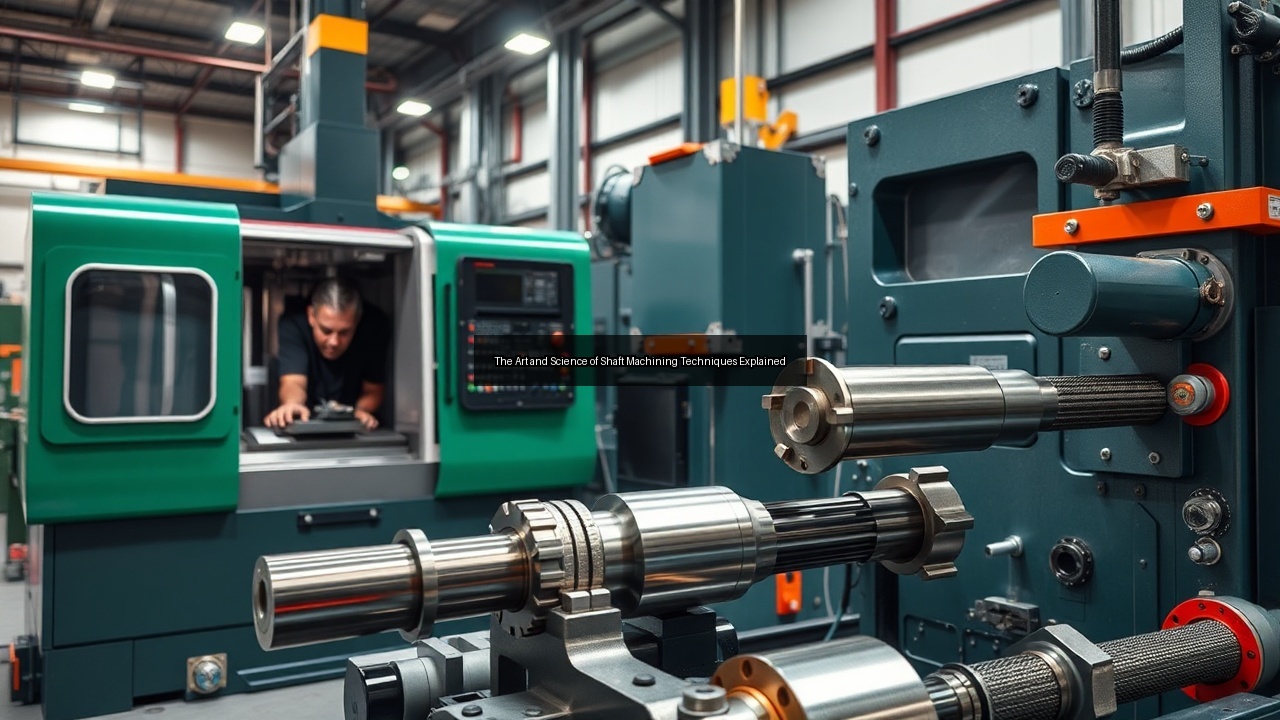
Shaft machining forms the core of producing components that transmit power and motion in countless machines. Engineers define shaft machining as the process of shaping raw materials into precise cylindrical parts, often with features like threads, splines, or keyways, to handle torque and rotational forces. This machining of shafts involves removing material through cutting tools on lathes or mills, ensuring the final product meets exact specifications for diameter, length, and surface finish. In mechanical engineering, shafts serve as the backbone of systems, from simple motor drives to complex transmissions. The shaft machining process starts with material selection and ends with rigorous inspection, balancing complexity and efficiency. Workers use CNC machines to automate cuts, reducing human error and speeding up production. Understanding what is shaft machining reveals its blend of artistry in design and scientific precision in execution, vital for reliable machinery performance. Shafts endure stresses from vibration and deflection, so machinists focus on geometry to minimize wear. This overview highlights why shaft production demands skilled tooling and process control, directly impacting the reliability of everything from automotive parts to aerospace assemblies.
Importance of Shaft Machining in Various Industries
Shaft machining drives innovation across industries, powering everything from everyday vehicles to high-stakes aerospace missions. In the automotive sector, drive shafts and countershafts ensure smooth power transmission, handling torque in engines and transmissions while withstanding thermal expansion and vibration. Manufacturers rely on precise shaft machining services to produce components that enhance fuel efficiency and durability. The aerospace industry demands even tighter tolerances for shafts in turbines and landing gear, where a minor deviation in diameter or shape could compromise safety. Shafts in these applications must resist extreme stresses, making machining crucial for reliability. In heavy machinery and manufacturing, shafts form the heart of pumps, motors, and conveyor systems, where surface finish affects friction and longevity. Without advanced shaft machining, industries face breakdowns, costly maintenance, and reduced output. The process supports global supply chains by enabling custom shaft production tailored to specific needs, like splined shafts for heavy-duty equipment. As demands grow for faster, lighter machines, shaft machining evolves to meet challenges in complexity and scale, underscoring its role in economic progress and technological advancement.
Materials Commonly Used in Shaft Machining
Material selection anchors successful shaft machining, dictating strength, machinability, and cost in manufacturing. Carbon steel dominates due to its affordability and versatility, ideal for general-purpose shafts in automotive and machinery applications where moderate torque resistance suffices. Alloy steel steps up for high-stress environments, offering superior hardness after heat treatment to combat deflection and wear. Stainless steel shines in corrosive settings, like food processing or marine equipment, maintaining integrity despite exposure to harsh elements. Aluminum appeals for lightweight needs in aerospace, reducing overall system weight while allowing easy machining with standard tools. Each material influences the workflow: softer aluminum cuts quickly but demands careful handling to avoid tool wear, while tough alloy steel requires robust CNC machines and optimized parameters. Engineers consider factors like thermal expansion and fatigue during material selection to ensure shafts perform under load without failure. In shaft production, blending these materials with precise threading or drilling enhances functionality, such as in splined or cam shafts. Ultimately, choosing the right material balances performance demands with manufacturing feasibility, driving efficient and reliable outcomes across diverse sectors.
Key Machining Techniques for Shafts
CNC Machining: The Backbone of Modern Shaft Production
CNC machining revolutionizes shaft production by delivering unmatched precision and repeatability in complex geometries. Operators program CNC machines to execute turning, milling, and drilling with minimal intervention, transforming raw stock into finished shafts ready for assembly. In shaft machining services, CNC technology handles everything from basic cylindrical shapes to intricate features like threads and splines, ensuring consistent diameter and length across batches. This method excels in high-volume manufacturing, where automation reduces cycle times and scrap rates. For instance, CNC turning centers grip the workpiece and rotate it against cutting tools, shaving material to exact specifications while monitoring vibration for quality. The integration of multi-axis CNC machines allows simultaneous operations, boosting efficiency in producing drive shafts or transmission components. Tooling advances, like carbide inserts, minimize wear and maintain surface finish, critical for torque transmission. Businesses seeking machining of shafts turn to CNC for its scalability, from prototypes to mass production. As the cornerstone of modern workflows, CNC machining ensures shafts meet stringent tolerances, supporting industries from automotive to aerospace with reliable, high-performance parts.
Turning and Milling: Essential Operations
Turning and milling stand as foundational operations in shaft machining, shaping raw materials into functional components with precision. Turning on a lathe rotates the shaft blank while stationary tools remove material, defining the core diameter and length essential for power transmission. Machinists use this technique for creating smooth cylindrical surfaces and adding features like threads or grooves, vital for coupling shafts in motors and gearboxes. Milling complements turning by employing rotating multi-tooth cutters to form flat surfaces, keyways, or splines perpendicular to the shaft axis. In CNC turning and milling setups, operators program paths to achieve complex shapes, such as tapered sections or helical leads for threading. These operations demand careful parameter control—speed, feed rate, and depth of cut—to prevent deflection and ensure accuracy. Tool wear becomes a key concern, addressed through high-quality inserts that maintain edge sharpness during prolonged runs. In shaft manufacturing, combining turning for axial features and milling for radial ones creates versatile parts like countershafts or cam profiles. This duo drives efficiency in machining shaft processes, delivering parts that withstand mechanical stresses in real-world applications.
Grinding and Surface Finishing Techniques
Grinding and surface finishing elevate shaft machining from rough form to polished precision, ensuring optimal performance and longevity. After initial turning or milling, grinding uses abrasive wheels to refine diameters and remove minute imperfections, achieving tolerances as tight as microns for high-reliability applications. Centerless grinding, in particular, supports long shafts without fixtures, ideal for automotive drive shafts where uniform surface finish reduces friction and heat buildup. Surface finishing techniques, like honing or lapping, further enhance texture, minimizing vibration and improving torque transfer in rotating systems. Machinists select abrasives based on material—diamond for hard alloy steel, aluminum oxide for carbon steel—to control stock removal and avoid thermal damage. These processes address related searches like shaft machining process details, focusing on parameters that influence roughness and roundness. In aerospace, where shafts face extreme stresses, superfinishing prevents fatigue cracks, extending service life. Quality inspection verifies results through profilometers, confirming adherence to specifications. By integrating grinding into the workflow, manufacturers achieve the sleek, durable surfaces that define superior machining services, balancing aesthetics with functional demands in diverse machinery.
Precision and Tolerances in Shaft Machining
Understanding Tolerances and Their Impact on Performance
Tolerances define the allowable deviation in shaft dimensions, directly shaping how well machined parts perform in demanding environments. Engineers specify tolerances for diameter, length, and shape to ensure shafts fit seamlessly into assemblies, preventing issues like misalignment or excessive vibration in power transmission systems. Tight tolerances, often under 0.01 mm, prove essential in aerospace shafts, where precision curbs deflection and maintains balance during high-speed rotation. In automotive applications, looser specs suffice for cost-effective production, yet still guarantee reliable torque handling. Tolerance selection hinges on factors like material properties—stainless steel's thermal expansion requires adjustments to avoid binding. Poor tolerance control leads to failures, such as uneven wear in splined shafts or noise in transmissions. Machining strategies incorporate these specs from design, using CNC machines to hit targets consistently. Understanding tolerances empowers teams to optimize for performance versus manufacturability, influencing everything from energy efficiency to safety. In mechanical engineering, this principle underscores why shaft machining demands rigorous adherence, turning potential weaknesses into strengths for robust, long-lasting components.
Dimensional Accuracy: Measuring Success
Dimensional accuracy serves as the benchmark for successful shaft machining, verifying that parts meet design intent through precise measurement tools. Calipers, micrometers, and coordinate measuring machines (CMMs) gauge critical features like diameter, length, and concentricity, ensuring shafts align perfectly in assemblies. In CNC machining, accuracy relies on calibrated tooling and stable workflows to counteract variables like tool wear or thermal shifts. For example, a drive shaft's runout must stay below specified limits to avoid vibration in vehicle transmissions. Engineers track metrics during production, adjusting parameters to refine outcomes. Advanced optical scanners provide non-contact inspection for complex shapes, capturing data on threads or cams with sub-micron resolution. Accuracy impacts reliability—slight errors amplify stresses, leading to premature failure in high-torque scenarios. In shaft production, achieving and documenting dimensional success builds trust in machining services, supporting certifications like ISO standards. This focus on measurement transforms raw data into actionable insights, driving continuous improvement in manufacturing precision and part quality.
Quality Control and Assurance Protocols
Quality control protocols safeguard shaft machining by embedding checks throughout the production cycle, from raw material inspection to final validation. Teams employ statistical process control to monitor variables like spindle speed and coolant flow, catching deviations early to maintain tolerances. Visual and tactile inspections detect surface defects, while non-destructive testing, such as ultrasonic scans, reveals internal flaws in alloy steel shafts. Assurance extends to traceability, logging every step with samples for audits, ensuring compliance in regulated industries like aerospace. Protocols address tool wear through routine calibration, preventing inaccuracies in grinding or milling. In CNC environments, software integrates real-time feedback, halting operations if parameters stray. For machining of shafts, these measures minimize rejects and rework, optimizing cost and delivery. Comprehensive training equips operators to uphold standards, fostering a culture of excellence. Ultimately, robust quality assurance protocols deliver shafts that exceed expectations, enhancing system reliability and customer satisfaction across manufacturing landscapes.
Design Considerations for Efficient Shaft Machining
Design for Manufacturing Principles
Design for manufacturing principles guide shaft creation to streamline production while maximizing functionality and minimizing costs. Engineers apply these rules early, favoring simple geometries that reduce machining complexity, like avoiding unnecessary undercuts that complicate tool access. In shaft design, incorporating standard tolerances and modular features allows off-the-shelf tooling, speeding CNC workflows. Principles emphasize accessibility—designing ends for easy fixturing prevents deflection during turning. Heat treatment compatibility factors in, ensuring shapes withstand distortion without post-process rework. For power transmission shafts, balancing diameter ratios with length optimizes strength against bending stresses. This approach cuts lead times in shaft manufacturing, appealing to clients seeking efficient machining services. Simulations predict issues like vibration, refining designs before cutting begins. By prioritizing manufacturability, teams achieve reliable parts with lower scrap rates, embodying smart strategy in mechanical engineering. These principles turn innovative concepts into practical, high-volume realities, bridging design intent with production prowess.
Geometry and Shape Optimization
Geometry and shape optimization in shaft design enhance performance by tailoring forms to specific loads and environments. Engineers analyze torque requirements to select diameters that resist torsion without excess material, using finite element analysis to model stresses and deflection. Splined or keyed shapes improve grip in transmissions, while tapered profiles distribute loads evenly in high-speed motors. Optimization considers machining feasibility—complex curves demand advanced CNC milling, increasing time and cost. For automotive shafts, streamlining shapes reduces weight, boosting efficiency without sacrificing durability. Vibration analysis guides fillet radii to minimize stress concentrations, extending life in rotating applications. Material interactions, like aluminum's lower modulus, influence shape choices to counter thermal expansion. In shaft production, optimized geometry simplifies threading and drilling, enhancing accuracy. This iterative process balances aesthetics, function, and manufacturability, yielding shafts that excel in diverse systems. Through thoughtful shape refinement, designers unlock efficiency gains, making machinery more responsive and resilient.
Material Selection: Balancing Strength and Cost
Material selection in shaft machining strikes a delicate balance between strength demands and production costs, informing every stage from design to finishing. Carbon steel offers a cost-effective base for low-to-medium duty shafts, providing adequate torque resistance at low expense, ideal for general machinery. Alloy steel elevates performance for heavy loads, incorporating elements like chromium for hardness post-heat treatment, though it raises machining costs due to tougher cutting. Stainless steel justifies premium pricing in corrosive or hygienic settings, resisting rust in food or marine applications while maintaining precision. Aluminum cuts weight for aerospace, easing handling in CNC machines but requiring strategies to manage softness and thermal effects. Engineers weigh factors like machinability ratings—higher ones speed workflows and reduce tool wear—against lifecycle benefits. In power transmission, selecting based on expected stresses ensures longevity, avoiding over-specification that inflates budgets. This strategic choice optimizes the cost-strength ratio, delivering value-driven shafts that perform reliably without unnecessary expense.
Future Trends and Technologies in Shaft Machining
Automation and CNC Technology Advancements
Automation and CNC technology advancements propel shaft machining toward unprecedented efficiency and precision, reshaping manufacturing landscapes. Next-generation CNC machines integrate AI-driven monitoring, predicting tool wear and adjusting parameters in real-time to sustain accuracy during long runs. Robotic arms handle loading and unloading, minimizing downtime in high-volume shaft production for automotive lines. Multi-tasking centers combine turning, milling, and grinding in one setup, slashing cycle times for complex parts like splined drive shafts. Additive manufacturing hybrids allow pre-forming intricate shapes, reducing subtractive waste in CNC workflows. These technologies address shaft machining services by enabling lights-out operations, where factories run unattended overnight. Enhanced sensors detect vibration and thermal shifts, ensuring tolerances hold in demanding geometries. As automation scales, it democratizes advanced capabilities, letting smaller shops compete with precision once reserved for giants. This evolution promises faster prototyping and customization, fueling innovation in mechanical engineering and beyond.
Impact of Advanced Materials on Shaft Machining
Advanced materials transform shaft machining by introducing composites and alloys that demand new techniques while unlocking superior properties. Titanium alloys, prized in aerospace, offer exceptional strength-to-weight ratios but challenge tools with their hardness, necessitating specialized coatings to curb wear in CNC turning. Carbon fiber-reinforced polymers emerge for lightweight shafts in electric vehicles, requiring hybrid processes like machining followed by curing to achieve precise diameters. These materials alter workflows—greater thermal expansion calls for adaptive fixturing, and lower machinability extends cycle times. Yet, benefits abound: reduced inertia enhances motor efficiency, and corrosion resistance cuts maintenance in harsh environments. Engineers adapt designs for these inputs, optimizing shapes to leverage anisotropy without compromising torque transmission. In manufacturing, advanced materials drive investments in high-speed spindles and coolant systems, balancing upfront costs with long-term gains. As adoption grows, they redefine shaft production, enabling sleeker, more durable components that push machinery boundaries.
Sustainability in Shaft Manufacturing Processes
Sustainability shapes the future of shaft manufacturing by integrating eco-friendly practices that reduce waste and energy use without sacrificing quality. Dry machining eliminates coolants, cutting disposal costs and environmental impact while suitable for aluminum shafts in green automotive designs. Recycling programs reclaim scrap from carbon steel operations, minimizing raw material extraction and supporting circular economies. Energy-efficient CNC machines with regenerative drives lower consumption in high-throughput facilities. Process optimizations, like predictive maintenance via IoT, prevent overuse of resources by averting breakdowns. Sustainable material selection favors bio-based alloys or recycled stainless steel, aligning with industry regulations. In shaft machining processes, these strategies enhance surface finishes through low-impact grinding, preserving performance. Companies adopt life-cycle assessments to track carbon footprints, from design to end-use. This holistic approach not only complies with global standards but boosts brand appeal, attracting clients prioritizing ethics. Sustainability thus elevates shaft production, fostering resilient, planet-friendly innovations in manufacturing.