The Essential Guide to Choosing the Right Food Grade Grease
Understanding Food Grade Lubricants
What Are Food Grade Lubricants?
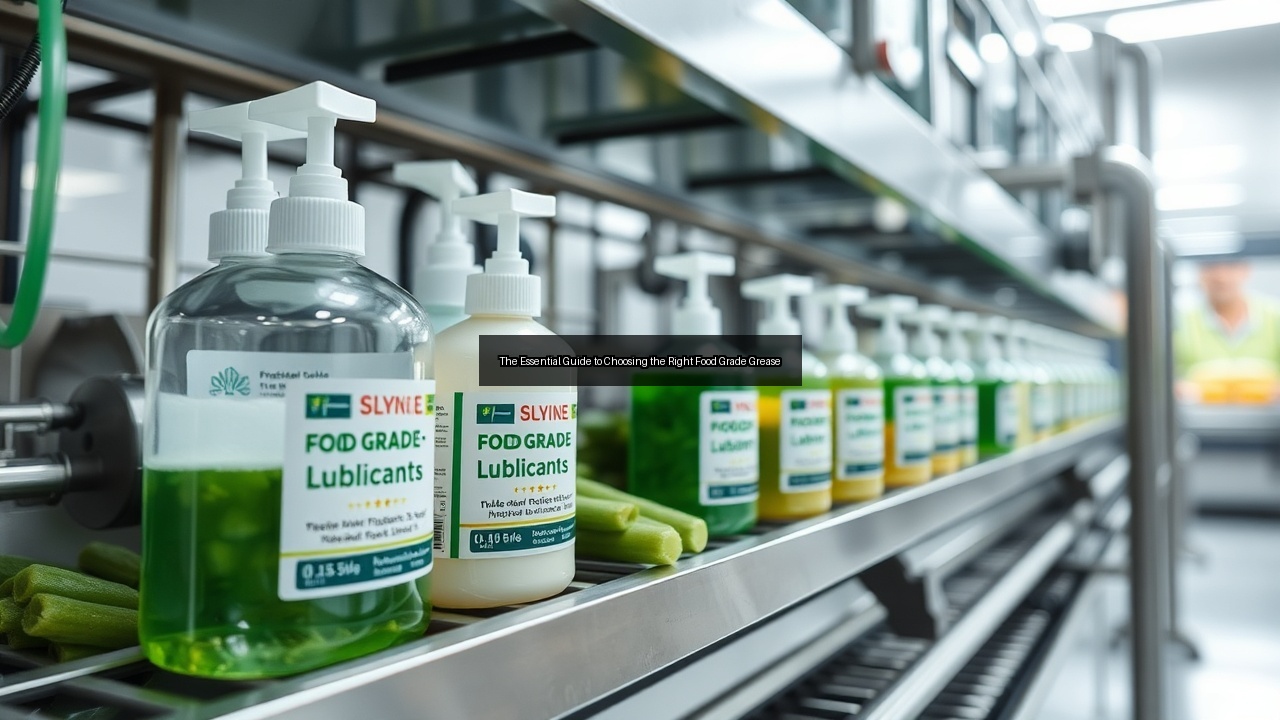
Food grade lubricants stand as specialized products designed to reduce friction in machinery while posing no risk to human health if they accidentally contaminate food. Manufacturers formulate these greases and oils using ingredients approved for incidental contact in food processing environments. Unlike standard industrial lubricants, food grade versions avoid toxic additives, ensuring safety in plants that handle edible goods. The term "food grade" refers to lubricants meeting strict standards set by organizations like the National Sanitation Foundation (NSF). These products often carry classifications such as H1 for incidental food contact or H2 for non-food-contact areas. Workers in bakeries, bottling lines, and meat packing facilities rely on these lube options to keep equipment running smoothly without endangering product integrity. Food grade grease, a thick semi-solid form, clings to bearings and gears, providing long-lasting protection. Oils, on the other hand, flow more freely for pumps and chains. Both serve critical roles in maintaining hygiene and efficiency. Selecting the right food grade lubricant involves understanding base stocks like synthetic or mineral oils, combined with thickeners and additives that resist water and extreme pressures. This knowledge empowers operators to prevent breakdowns and uphold food safety protocols. In essence, food grade lubricants bridge mechanical reliability and regulatory compliance, making them indispensable in modern food production.
Importance of Food Grade Grease in the Industry
Food grade grease plays a pivotal role in safeguarding operations across the food processing sector, where machinery downtime can lead to massive losses and health risks. This specialized lube prevents wear on conveyor belts, mixers, and slicers, extending equipment life and minimizing repair costs. In environments teeming with moisture, dust, and varying temperatures, standard greases fail quickly, but food grade options endure, reducing the frequency of applications. Beyond mechanical benefits, these greases ensure compliance with hygiene standards, protecting consumers from potential contaminants. Factories producing dairy, beverages, and packaged goods depend on them to avoid recalls that damage reputations and finances. The grease's non-toxic nature allows incidental contact without halting production lines. Operators appreciate how food grade grease seals out debris, preventing microbial growth that could compromise food safety. In high-speed packaging units, it maintains consistent performance, boosting throughput. Industry experts emphasize its role in sustainability too—longer-lasting grease means less waste and fewer disposals. Training programs highlight proper use of food grade grease to maximize these advantages. Ultimately, integrating this essential lubricant fosters a safer, more efficient workflow, directly impacting the bottom line for food manufacturers worldwide.
Key Regulations Governing Food Grade Lubricants
Regulations form the backbone of food grade lubricants, dictating formulation and use to protect public health. The U.S. Food and Drug Administration (FDA) oversees ingredients through Title 21 of the Code of Federal Regulations, approving only those safe for incidental contact. The NSF International certifies products under H1 and H2 categories, with H1 allowing up to 10 parts per million in food. In Europe, the European Hygienic Engineering & Design Group (EHEDG) sets similar benchmarks, ensuring lubricants align with global trade needs. These rules mandate full disclosure of components, prohibiting heavy metals or carcinogens. Manufacturers must register products and undergo rigorous testing for toxicity and performance. Violations trigger fines, shutdowns, or product bans, underscoring the stakes. Food processors audit suppliers regularly to verify compliance, often requiring certificates of analysis. International standards like ISO 21469 further validate hygienic design and production processes. These regulations evolve with scientific insights, prompting updates to address emerging contaminants. By adhering to them, companies not only avoid legal pitfalls but also build trust with regulators and consumers. Navigating this framework demands vigilance, yet it guarantees that food grade lubricants enhance safety without compromising functionality in demanding industrial settings.
Types of Food Grade Grease
Synthetic vs. Mineral-Based Greases
Synthetic greases outperform mineral-based ones in extreme conditions, offering superior stability and longevity for food grade applications. Derived from chemical compounds like polyalphaolefins or esters, synthetic options resist oxidation and breakdown under high heat or cold. They flow better at low temperatures, ideal for frozen food lines, and maintain viscosity in humid environments common in processing plants. Mineral-based greases, refined from petroleum, provide cost-effective performance for moderate duties, such as general lubrication in baking ovens. However, they degrade faster in water-heavy areas like beverage production, leading to more frequent reapplication. Food grade synthetic greases often include advanced additives for anti-wear and corrosion resistance, ensuring equipment like pumps lasts longer. In contrast, mineral greases suit budget-conscious operations but may require thicker formulations to match durability. Choosing between them hinges on specific needs—synthetics excel in demanding scenarios, while minerals handle routine tasks efficiently. Both must meet H1 standards, but synthetics edge out in versatility across lubricants for food processing. Processors evaluate NLGI grades for consistency, with synthetics typically offering broader ranges. This comparison guides selections that balance performance, cost, and safety in food-safe environments.
Common Applications for Food Grade Lubricants
Food grade lubricants find widespread use in diverse applications, from conveyor systems in meat packing to hydraulic systems in dairy processing. In bottling plants, these greases lubricate chains and guides, preventing slippage and ensuring smooth product flow. Bakery equipment benefits from them on dough mixers and ovens, where heat resistance keeps operations uninterrupted. For vegetable canning lines, water-resistant food grade oils protect bearings from washdowns without contaminating batches. Pharmaceutical food production employs them in tablet presses and fillers, maintaining precision while upholding sterile conditions. Seafood processors rely on corrosion-resistant variants to combat salty environments. In confectionery manufacturing, low-odor greases avoid tainting delicate flavors. These lubricants also service packaging machinery, reducing friction on seals and cutters for consistent seals. Beverage industry applications include lubricating valves and pumps handling acidic juices. Even in pet food production—treated similarly to human food—these products ensure hygiene. Selecting the appropriate food grade lubricant matches viscosity to speed and load, optimizing each setup. Regular audits confirm their efficacy, preventing contamination risks. Overall, these versatile solutions support the backbone of food industries, enabling reliable performance across varied production landscapes.
Choosing Between Grease and Oil for Food Processing
Grease suits static or slow-moving parts in food processing, while oil excels in high-speed, circulating systems, guiding choices based on equipment demands. Grease, a semi-solid blend of base oil and thickener, adheres to surfaces like bearings and gears, providing long-term protection against wear and contaminants. In mixers or ovens, it seals out moisture during frequent cleanings, reducing re-lubrication needs. Oil, fluid and penetrating, flows through pumps, chains, and hydraulics, dissipating heat effectively in continuous operations like bottling lines. Food grade oils prevent buildup in tight spaces where grease might over-thicken. Processors weigh factors like temperature—grease holds up in extremes, oil in moderates. Application methods differ too: grease guns for targeted delivery, oil baths for immersion. Compatibility with seals matters; mismatched types cause leaks or failures. For hybrid setups, multi-purpose food grade lubricants bridge gaps. Cost plays a role—oils often require more volume but less frequent changes. Training ensures proper selection, avoiding mismatches that compromise food safety. By evaluating load, speed, and environment, facilities optimize lubrication strategies, enhancing efficiency and longevity in food processing machinery.
Selecting the Right Food Grade Grease
Factors to Consider When Choosing Food Grade Grease
Operators prioritize viscosity, load capacity, and NSF classification when selecting food grade grease to match operational needs. Viscosity determines flow; higher grades suit heavy loads in presses, lower ones for light-duty chains. Load capacity, measured by EP additives, handles pressures in extruders without shearing. H1 certification confirms safety for incidental contact, essential for food safety compliance. Water resistance proves crucial in washdown areas, preventing dilution and rust. Temperature range guides choices—high-drop point greases endure ovens, low-pour variants cold storage. Compatibility with existing systems avoids reactions that degrade performance. Cost-effectiveness balances upfront expense with longevity, as premium greases cut maintenance time. Environmental factors like dust or chemicals influence additive packages. Brand reputation and supplier support ensure quality and quick access. Testing samples in real conditions validates fits. Documentation, including SDS and certificates, aids audits. By systematically assessing these elements, food processors secure greases that boost reliability, minimize downtime, and uphold standards in lubricants for food environments.
The Role of Temperature and Environment
Temperature swings and harsh environments dictate food grade grease performance, demanding formulations that adapt without failing. High-heat areas like fryers require greases with drop points above 500°F to avoid thinning and contamination. Cold storage units need ones that remain pliable below freezing, ensuring pumps start reliably. Humid settings, prevalent in dairy or beverage processing, call for water-repellent types that resist emulsification during cleanings. Corrosive atmospheres from acids or salts in canning lines necessitate anti-corrosion additives in the lube. Dust-laden mills benefit from tacky greases that seal components. UV exposure in open-air facilities accelerates degradation, so stabilized options prevail. Seasonal variations prompt hybrid selections for year-round use. Monitoring tools like thermometers help predict needs, while lab tests confirm endurance. Proper storage prevents premature breakdown from improper conditions. Integrating these considerations yields greases that maintain lubrication integrity, supporting seamless food processing operations amid diverse challenges.
Compatibility with Materials: Plastic and Beyond
Food grade grease must harmonize with plastics, metals, and elastomers to prevent damage in mixed-material equipment. Plastics like polyethylene in conveyor guides swell or crack with incompatible lubes, so low-swelling formulations protect conveyor belts and housings. Metals such as stainless steel in mixers demand non-corrosive greases to avoid pitting. Elastomers in seals and gaskets require oils that resist hardening or softening, ensuring tight fits. Compatibility charts from manufacturers guide selections, listing tested pairings. In food processing, where plastics abound in packaging, mismatched grease leads to failures and contamination. Testing involves applying samples and observing interactions over time. Multi-material setups, common in automated lines, favor versatile food grade lubricants. Regulatory nods like FDA approval extend to material safety. Upgrading older equipment often requires re-evaluating grease types for new plastics. This focus preserves machinery integrity, extends service life, and maintains food safety across diverse components.
Ensuring Food Safety with Lubricants
Understanding the Food Safety Modernization Act
The Food Safety Modernization Act (FSMA) shifts focus from reaction to prevention in food safety, directly impacting lubricant use in processing facilities. Enacted in 2011, FSMA mandates hazard analysis and risk-based preventive controls, requiring operators to assess lubrication as a potential contaminant source. Facilities must document how food grade lubricants fit into their plans, ensuring H1-rated products prevent adulteration. Training provisions emphasize proper handling to avoid cross-contamination. Audits under FSMA scrutinize storage, application, and disposal of these lubes. The act's produce and preventive control rules extend to all sectors, pushing adoption of certified greases. Compliance software tracks lubricant inventories against FSMA standards. Non-adherence risks FDA warnings or shutdowns. FSMA fosters collaboration between regulators and industry, updating guidelines for emerging risks. By embedding food grade lubricants into FSMA frameworks, processors proactively shield supply chains, enhancing overall food safety and consumer confidence.
Best Practices for Applying Food Grade Lubricants
Apply food grade lubricants methodically to maximize efficacy and safety, starting with clean surfaces free of old residue or debris. Use dedicated tools like grease guns to prevent cross-contamination from industrial lubes. Follow manufacturer dosages—over-application wastes product and attracts dirt, under-application invites wear. In running machinery, inject slowly to distribute evenly without excess purge. Schedule applications during downtime for thorough coverage, especially in hard-to-reach areas. Wear PPE to maintain hygiene, and label storage to track expiration. Integrate into maintenance routines with checklists for consistency. Train staff on techniques, emphasizing color-coding for food-safe tools. Post-application, monitor for leaks or unusual noises indicating issues. Dispose of waste per environmental regs, recycling where possible. These practices ensure lubricants perform optimally, bolstering food safety and equipment reliability in processing environments.
How to Maintain Proper Lubrication in Food Processing
Maintain proper lubrication through routine inspections and data-driven adjustments to sustain food processing efficiency. Schedule visual checks weekly, looking for grease leakage or dry spots on bearings and chains. Use condition monitoring tools like vibration analysis to detect early wear from inadequate lubes. Track usage logs to predict reapplication intervals, adjusting for production intensity. Clean equipment before lubricating to remove contaminants that degrade food grade grease. Rotate stock to use oldest first, preventing solidification. Calibrate dispensers for precise amounts, avoiding overuse that clogs systems. In high-moisture areas, opt for sealed units to protect lubes. Annual audits review performance against benchmarks, incorporating feedback from operators. Partner with suppliers for technical support on optimizations. These steps minimize failures, extend asset life, and reinforce food safety protocols, ensuring seamless operations in demanding food environments.
See Also
- Why Food Manufacturers Can't Ignore Food Grade Lubricants
- A Deep Dive into the Chemistry of Food Grade Lubricants
- Innovative Food Grade Lubricants Transforming the Food Industry
- Exploring the Benefits of Food Grade Lubricants for Equipment Longevity
- How to Use Food Grade Lubricants Safely in Your Kitchen